
Statement on the Closure of the Context News Brand
A statement on the Closure of the Context News Brand from Antonio Zappulla, CEO of the Thomson Reuters Foundation.

A statement on the Closure of the Context News Brand from Antonio Zappulla, CEO of the Thomson Reuters Foundation.

Our CEO Antonio Zappulla reflects on 2025: “Our mission to build free, fair, and informed societies has never felt more urgent.”
Our CEO Antonio Zappulla reflects on 2025: “Our mission to build free, fair, and informed societies has never felt more urgent.”

We have supported newsrooms in South Africa to harness the benefits of AI, while ensuring that core journalistic standards remain intact.
We have supported newsrooms in South Africa to harness the benefits of AI, while ensuring that core journalistic standards remain intact.

The Thomson Reuters Foundation has created the world’s largest dataset on how companies are using AI. Through our free tool, we’re supporting companies to prioritise transparency and responsible practice.
The Thomson Reuters Foundation has created the world’s largest dataset on how companies are using AI. Through our free tool, we’re supporting companies to prioritise transparency and responsible practice.

View our CEO Antonio Zappulla’s opening remarks for Day Two of Trust Conference 2025.
View our CEO Antonio Zappulla’s opening remarks for Day Two of Trust Conference 2025.

View our CEO Antonio Zappulla’s opening remarks for Day One of Trust Conference 2025.
View our CEO Antonio Zappulla’s opening remarks for Day One of Trust Conference 2025.

Trust Conference, the annual flagship forum hosted by the Thomson Reuters Foundation, returns on 21-22 October in London.
Trust Conference, the annual flagship forum hosted by the Thomson Reuters Foundation, returns on 21-22 October in London.

Now open for company submissions, the AI Company Data Initiative is building a dataset on corporate AI adoption, so that this technology can be used in the public interest.
Now open for company submissions, the AI Company Data Initiative is building a dataset on corporate AI adoption, so that this technology can be used in the public interest.

This week marks the announcement of the 2025 TrustLaw Awards winners, recognising the remarkable legal teams and pro bono projects undertaken by the network’s membership.
This week marks the announcement of the 2025 TrustLaw Awards winners, recognising the remarkable legal teams and pro bono projects undertaken by the network’s membership.

AI will be a critical component of the future of journalism. But its ethical and equitable adoption is key to advancing the resilience of independent media.
AI will be a critical component of the future of journalism. But its ethical and equitable adoption is key to advancing the resilience of independent media.
AI will be a critical component of the future of journalism. But its ethical and equitable adoption is key to advancing the resilience of independent media.

Our Media in Exile Project Manager, Nick Slater, sat down with the Editor-in-chief of an exiled Russian media outlet to find out how they are using AI to reach audiences with critical information.
Our new TRF Insights report sheds light on the opportunities and challenges of AI in journalism in the Global South and emerging economies.

Our new TRF Insights report sheds light on the opportunities and challenges of AI in journalism in the Global South and emerging economies.

The Thomson Reuters Foundation and UNESCO have partnered to launch the AI Company Data Initiative, the first tool of its kind supporting corporate leaders in identifying how their organisation uses AI technologies so they can harness its power while minimising…
The Thomson Reuters Foundation and UNESCO have partnered to launch the AI Company Data Initiative, the first tool of its kind supporting corporate leaders in identifying how their organisation uses AI technologies so they can harness its power while minimising…

This report analyses the legal and policy frameworks governing AI across seven countries to explore how these laws and policies integrate human rights, ethical considerations and transparency.
This report analyses the legal and policy frameworks governing AI across seven countries to explore how these laws and policies integrate human rights, ethical considerations and transparency.

This three-part toolkit aims to empower journalists and CSOs to inform public discourse and advocate for ethical and responsible AI deployment.
This three-part toolkit aims to empower journalists and CSOs to inform public discourse and advocate for ethical and responsible AI deployment.

This practical starter guide is designed to help newsrooms identify ethical risks in their AI applications and take action to mitigate these.
This practical starter guide is designed to help newsrooms identify ethical risks in their AI applications and take action to mitigate these.

This report assesses the current legal framework on transparency in the procurement, implementation, and development of AI in the Latin American region.
This report assesses the current legal framework on transparency in the procurement, implementation, and development of AI in the Latin American region.

Our new report shines a spotlight on journalism in the AI era and provides a platform for the voices of journalists in the Global South and emerging economies.
Our new report shines a spotlight on journalism in the AI era and provides a platform for the voices of journalists in the Global South and emerging economies.

This toolkit unpacks the context of AI governance, in Africa and globally, and considers advocacy approaches for future governance.
This toolkit unpacks the context of AI governance, in Africa and globally, and considers advocacy approaches for future governance.

This study examines Thailand’s AI and technology landscape through the lens of human rights.
This study examines Thailand’s AI and technology landscape through the lens of human rights.
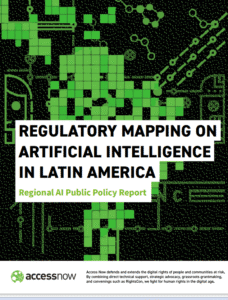
Latin America has seen several efforts to regulate the use of Artificial Intelligence (AI). Countries are increasingly enacting bills, policies and strategies, mainly motivated by European regulation. There is a pressing demand for these regulatory attempts to respect international human rights standards. This comparative analysis explores the different AI regulations…
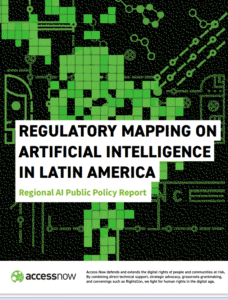
Latin America has seen several efforts to regulate the use of Artificial Intelligence (AI). Countries are increasingly enacting bills, policies and strategies, mainly motivated by European regulation. There is a pressing demand for these regulatory attempts to respect international human rights standards. This comparative analysis explores the different AI regulations…
As AI systems become increasingly embedded in everyday life, they raise important questions about regulation, ethics, and their potential impact on human rights. These questions find form in debates about the governance of AI – how do we provide protection without stifling innovation? How can the law keep pace with…
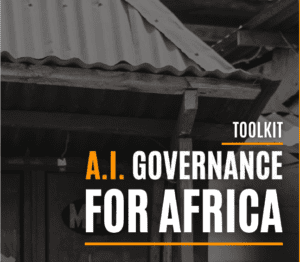
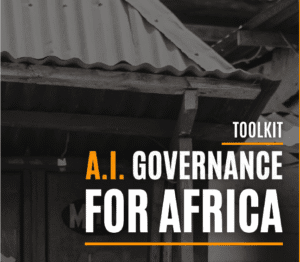
As AI systems become increasingly embedded in everyday life, they raise important questions about regulation, ethics, and their potential impact on human rights. These questions find form in debates about the governance of AI – how do we provide protection without stifling innovation? How can the law keep pace with…